What is a Verified Account?
A Verified Account is a free account you can set up with Zonos. You'll get free access to tools to help you calculate U.S. duties and get HTS codes, but the main purpose of the Verified Account is to allow to you continue shipping to the U.S. via the post. Now, with the new data requirements starting October 22, your Verified Account also flags which of your items need additional info to clear into the U.S., and helps you store that info so it is used on your postal shipments to the U.S.
What you get
How it works
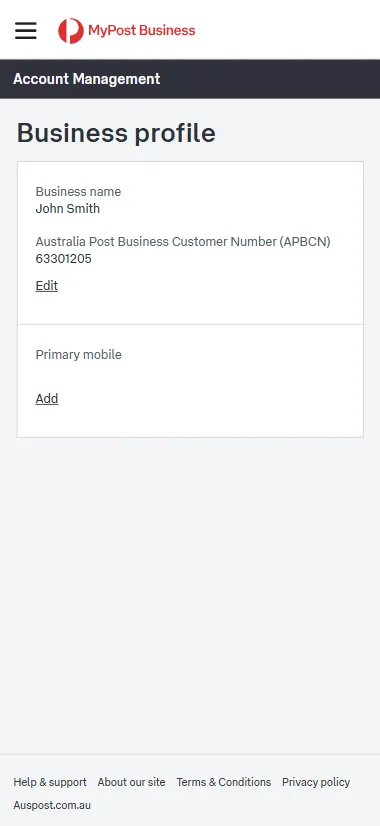
- When you create your Zonos Verified Account, you'll select what kind of Australia Post shipper number you have—Merchant Location ID (MLID), Australia Post Customer Number (APCN), or Australia Post Business Customer Number (APBCN)—and enter it.
- Zonos will use that number to link your Verified Account to your business account with AusPost.
- Then, when you send shipments valued at $2,500 USD or less to the U.S. via AusPost, Zonos will bill you for the associated duty and postal clearance fees.
- Zonos will also check your Catalog for additional product-specific information on the shipments you send via AusPost, matching each item to your Catalog through your synced orders, or by its SKU if you built your Catalog with a CSV or the Catalog API.
How much does it cost?
There are no subscription costs.
There is a postal clearance fee charged per shipment, which varies by post. You can view yours during the sign-up process (after creating the account, you can view it in your Dashboard's Billing Settings, under Plan.)
While Zonos offers other subscription-based ecommerce solutions, you do not need them. All you need is your free Verified Account.
Get your products ready for October 22
If you already have a Verified Account with billing set up, your duty payments continue as they do today. If you don't have one yet, start with Create a free Zonos Verified Account below.
The U.S. now asks for more information about certain products before they can enter the country, and your Verified Account is where you supply it. Getting ready takes four one-time steps. If you build your Catalog with a CSV or the Catalog API, there is also one detail to include on every U.S.-bound shipment: each product's SKU, so Zonos can match it to your Catalog. To learn which products are in-scope and why, read what's changing on October 22.
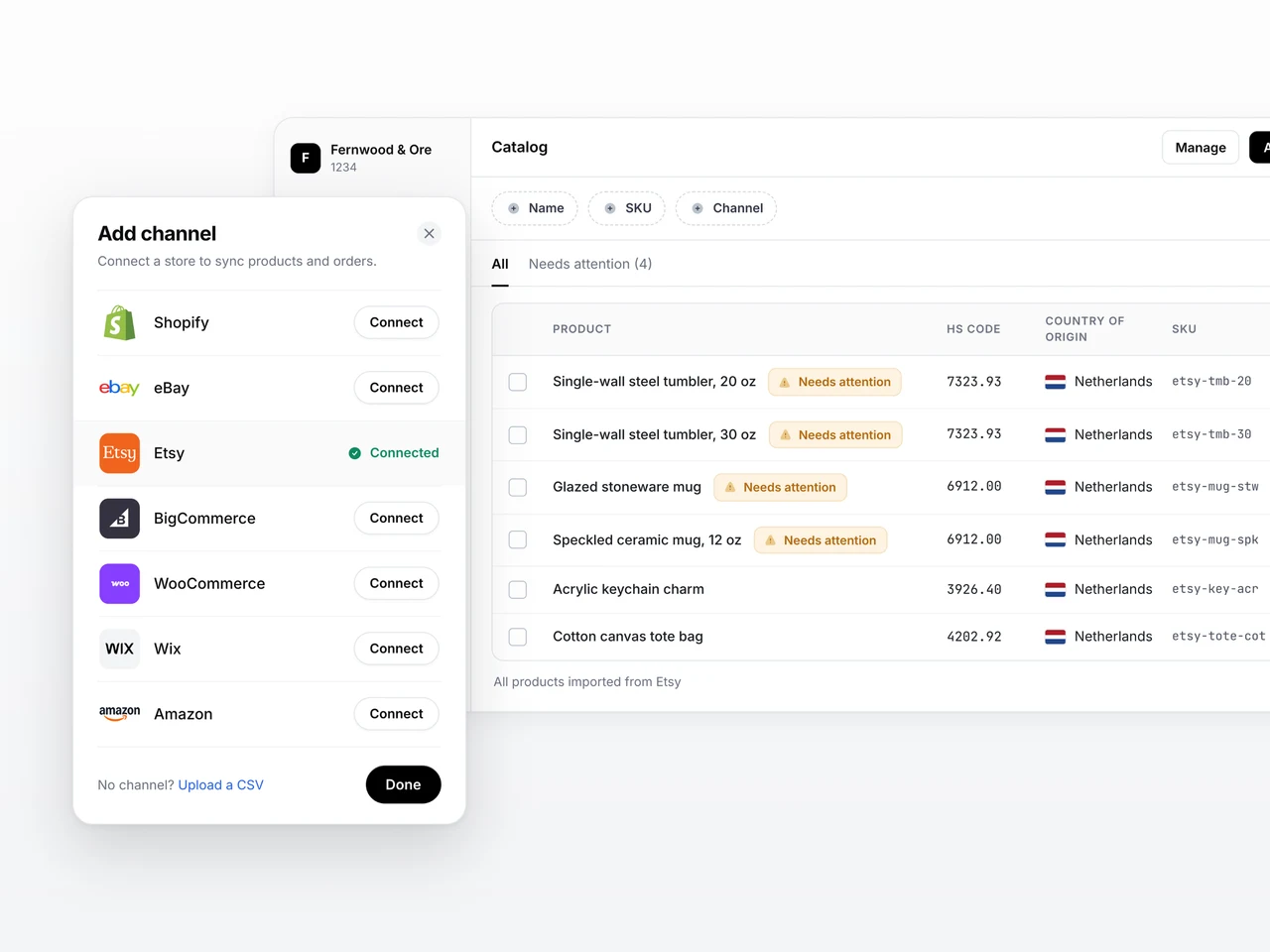
| Step 1
Available now
Connect your Catalog once
You have three ways to do this:
- Connect your store with Zonos Sync. Your products and orders sync automatically, keeping your Catalog current as your store changes. Etsy, eBay, Shopify, WooCommerce, Adobe Commerce (Magento), Wix, Amazon, and BigCommerce are ready, with more being added.
- Upload a CSV. This works for any platform, and is the route to take if a connection to your store isn't available yet.
- Use the Catalog API. If your product data already lives in your own system and you have developer resources, you can write products to your Catalog directly with the Catalog API. That system stays your source of truth.
If you use a CSV or the Catalog API, include each product's SKU in your Australia Post shipment data, exactly as it appears in your Catalog, so Zonos can match each item to the right product.
Whichever you choose, Zonos then knows what you sell, and can tell you which items need more information before they can be shipped to the U.S.
| Step 2
Available now
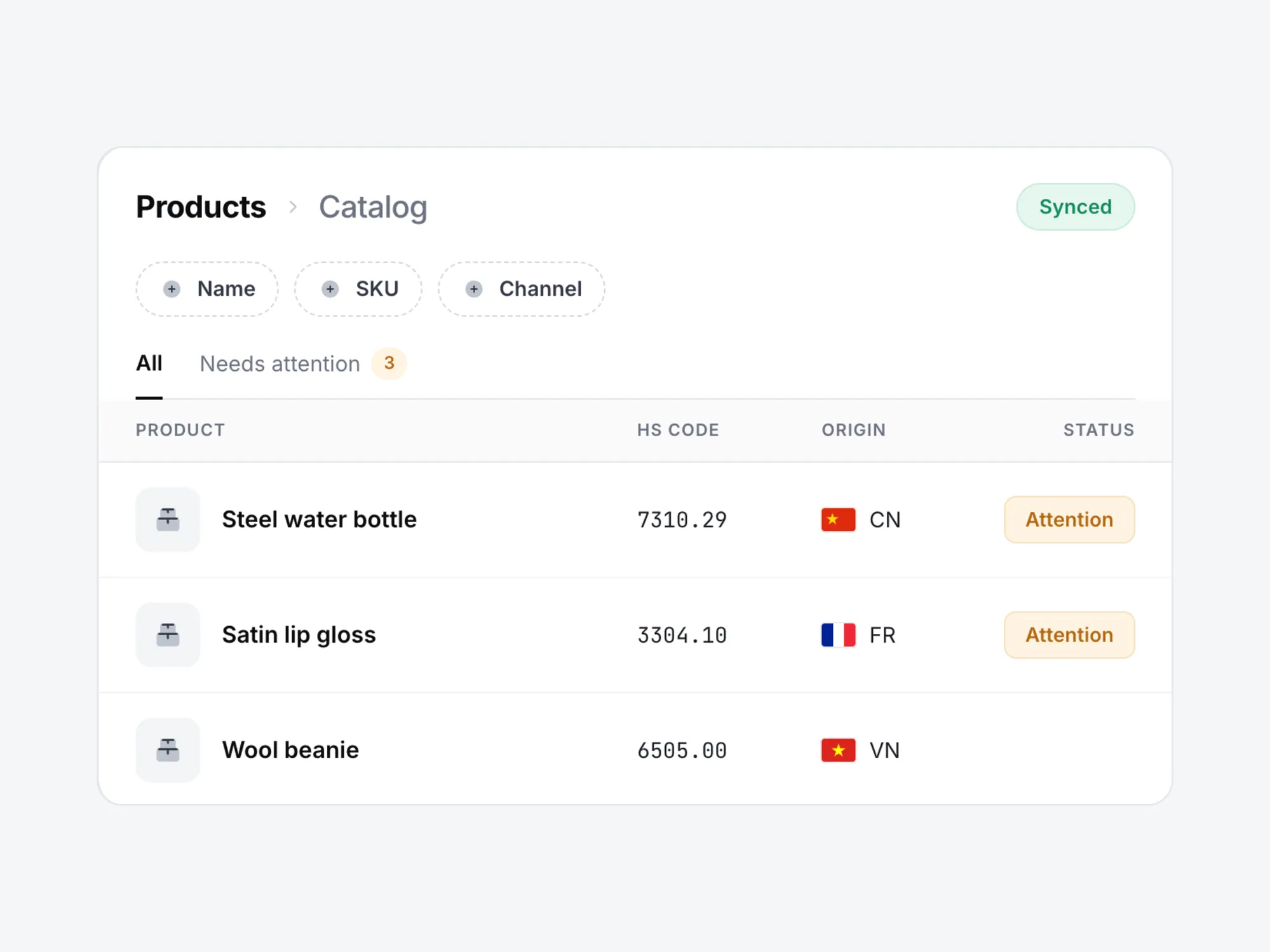
See which products need more data
Zonos checks every product in your Catalog and flags the ones that need attention, with the reason attached—melt and pour data for a steel water bottle, U.S. Food and Drug Administration (FDA) details for a lip gloss. Anything without a flag is good to go.
The checks cover both sides of U.S. entry: the agencies that control what is allowed in, such as the FDA and the U.S. Consumer Product Safety Commission (CPSC), and the tariff programs that decide what you pay, such as Section 232.
| Step 3
Available now
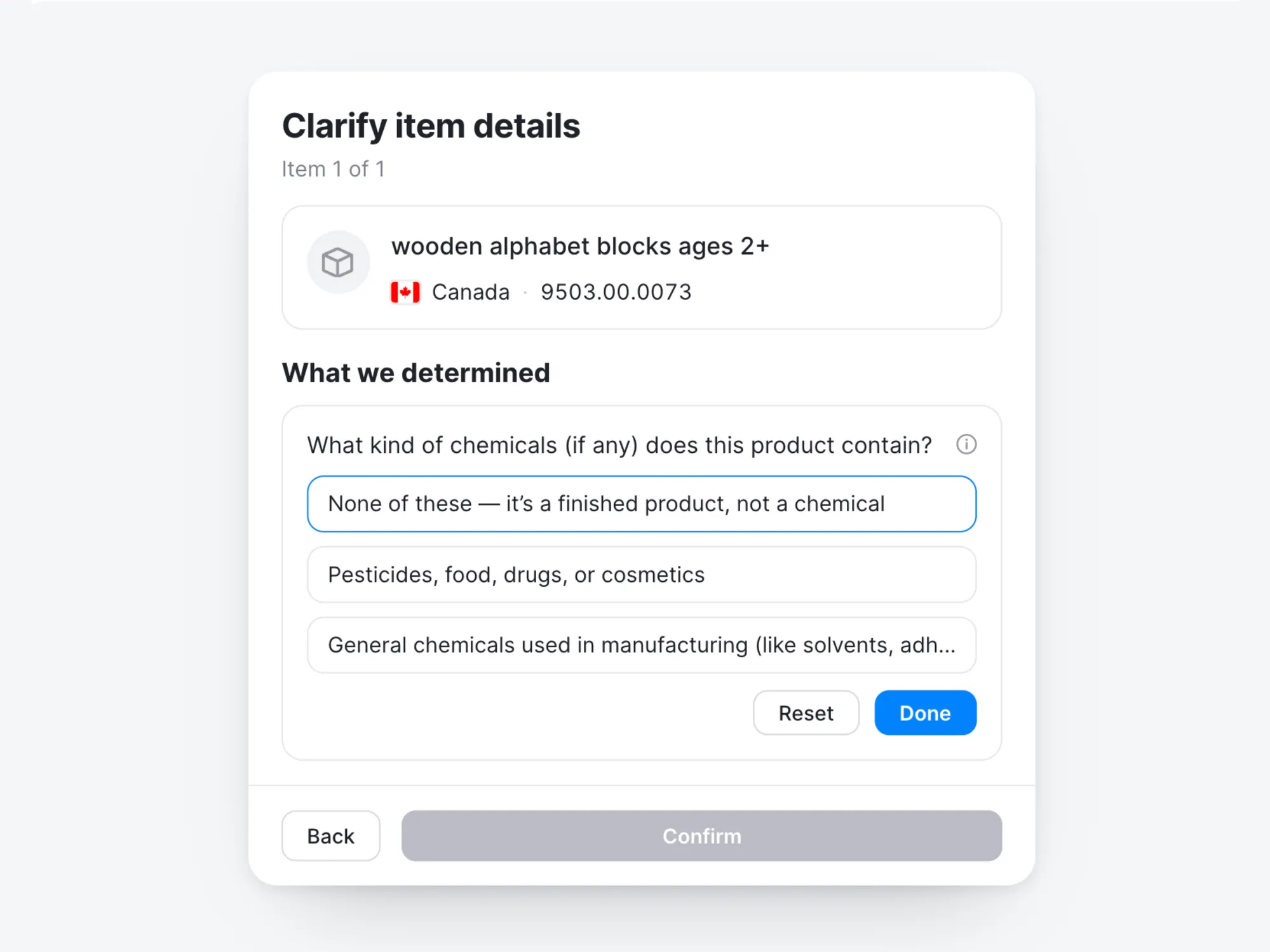
Let Zonos Clarify ask, and draft the answers
Requirements differ by agency and by product. Zonos Clarify Zonos AI works out what each flagged item has to provide and proposes the likely answer from the product information you already have, so you review and confirm rather than start from a blank form.
Each answer is saved to the product and reused, so you never answer twice.
| Step 4
Available now
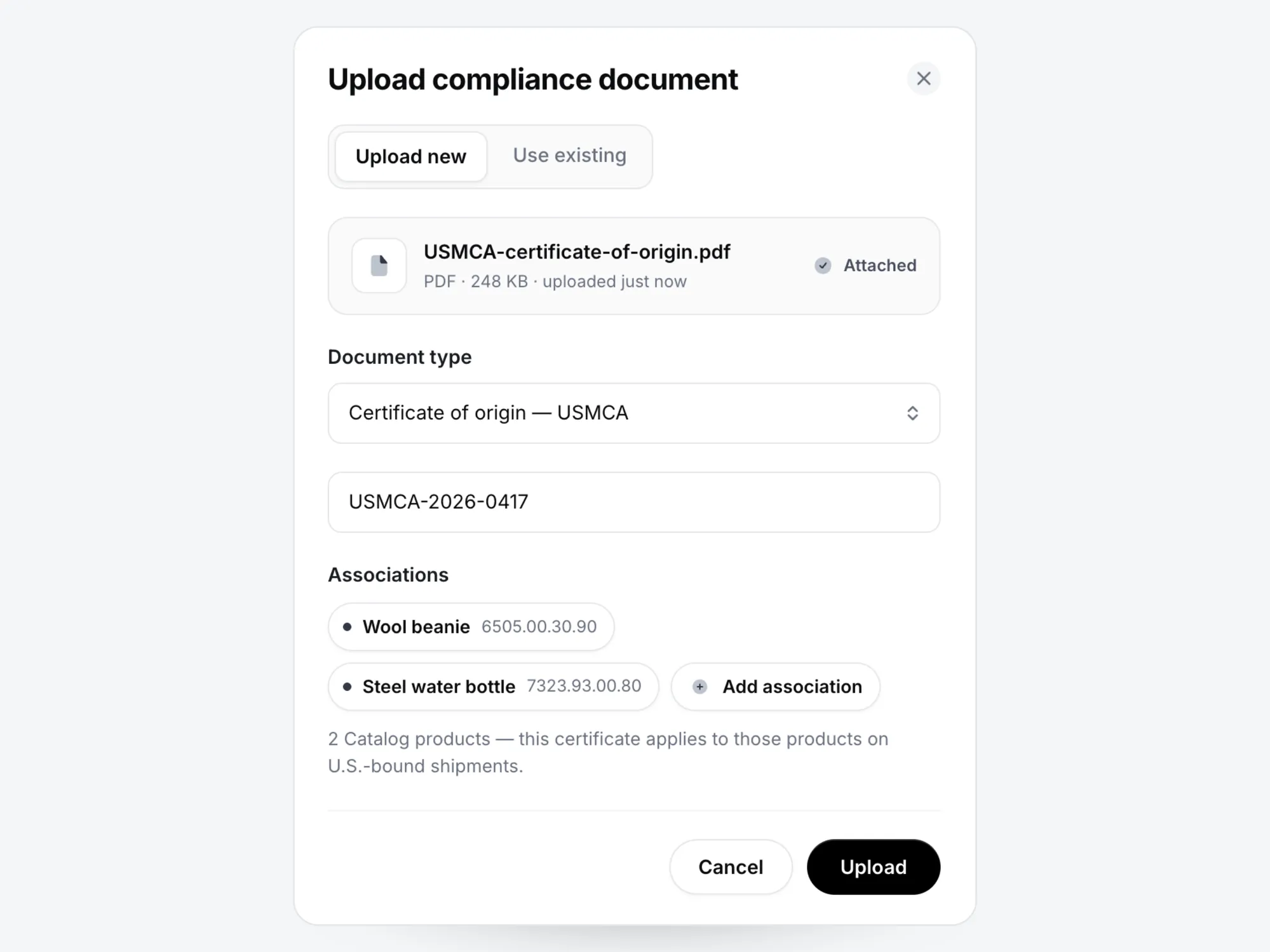
Add supporting documents
For requirements that paperwork satisfies, you can upload documents directly to your Catalog: certificates of origin, metal origin records for Section 232 (melt and pour for steel, smelt and cast for aluminum), and trade agreement documentation. Upload a document once and link it to every product it covers.
| Step 5
CSV or API options only: include each product's SKU on every U.S. shipment
If you connected your store with Zonos Sync, you can skip this step: your orders come in with their tracking numbers, so Zonos matches each shipment to its order automatically.
If you built your Catalog with a CSV or the Catalog API, Zonos matches each item on your shipment to your Catalog by its SKU. When you create a U.S.-bound shipment with Australia Post, enter each product's SKU in the SKU field, exactly as it appears in your Zonos Catalog. If you create shipments through the Australia Post Create Shipment API, use the shipments.items.item_contents.sku field.
Your Australia Post shipper identifier still connects each shipment to your Verified Account, the same way it does today.
| After setup
Starts Oct 14
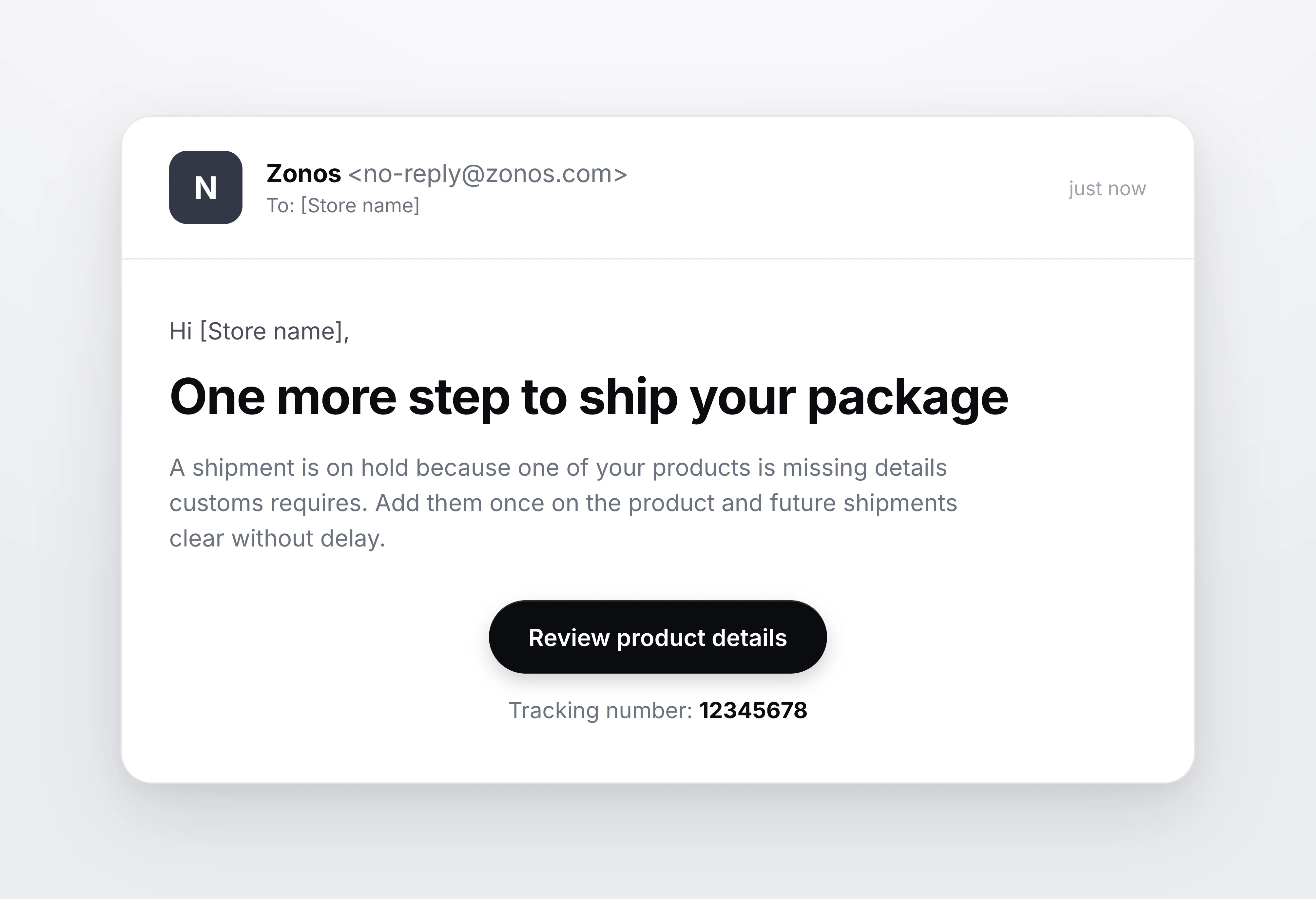
Zonos comes to you when a detail is missing
You do not have to keep the Catalog perfect on your own. Zonos checks each U.S.-bound shipment against what you have already provided, and if something is missing, emails you a link to the one question that needs answering. Your answer is saved to the product, so it is not asked again.
| Step 1 (one-time setup)
Create a free Zonos Verified Account
- Follow your referral link from AusPost's email, or click "Sign up today" below.
- Create your account. Sign up with your Google or Microsoft account (or enter your information manually), enter your business information and click "Continue to Dashboard Lite." At this point, you have an account, but it isn't verified until you complete the next step.
- Add a payment method and your Australia Post shipper number (MLID, APCN, or APBCN) to turn your account into a Verified Account. View the FAQs below if you're unsure where to find these.
- If you have multiple shipper numbers, you need to follow these steps to create a Verified Account for each one.
After successfully completing these steps, congrats! You now have a Zonos Verified Account. This account enables AusPost to accept your U.S.-bound packages, knowing that the requirement for duty payment will be fulfilled. Zonos will bill you for the duties and postal clearances fees on each shipment tied to your Verified Account.
| Step 2 (optional)
Use free Zonos tools to calculate duty costs
So you can add them to your shipping/product prices
If you aren’t already including duty costs at checkout, Zonos' free tools can help you calculate them. After you’ve calculated the duties and fees, you can adjust product prices or shipping prices so shoppers pay the duties upfront.
This way, when you’re billed for the duty costs associated with your U.S. shipments, you’ll have already collected it and have it ready to pay.
Your Verified Account does not integrate with your ecommerce website to collect duties from your shoppers at checkout. It's only purpose is to allow you to continue shipping to the U.S., as a means to pay U.S. duties when required.
| Step 3
Ship your packages to the U.S.
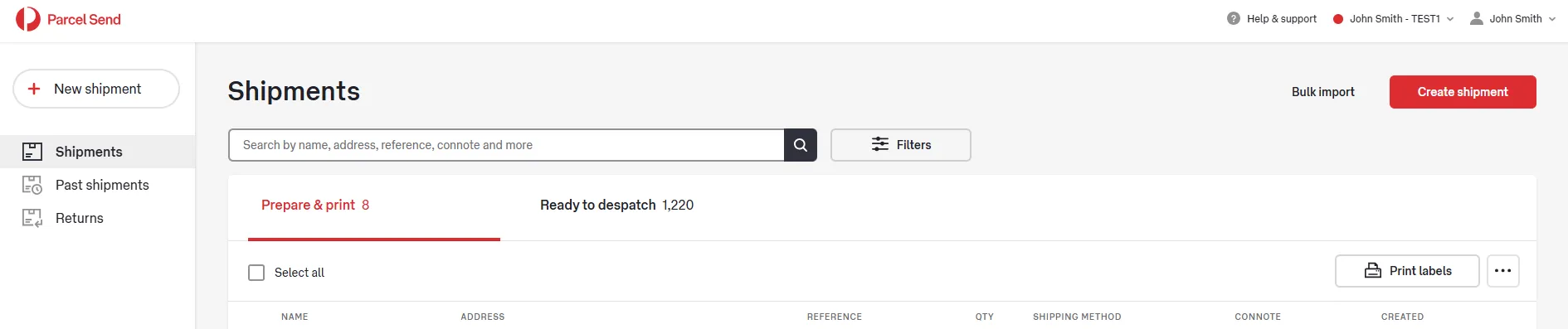
Ship your packages as you normally do (and from the same systems that you normally ship from). Australia Post will send shipment data to Zonos for all shipments processed using your business account.
If you built your Catalog with a CSV or the Catalog API, include one thing on every U.S.-bound shipment: enter each product's SKU in the SKU field, exactly as it appears in your Zonos Catalog. That's how Zonos matches each item to the details saved in your Catalog. If you create shipments through the Australia Post Create Shipment API, use the shipments.items.item_contents.sku field. If you connected your store with Zonos Sync, Zonos matches each shipment to its order by tracking number, so there's nothing extra to enter.
Once the shipment arrives, you don’t have to worry about your U.S. customer refusing delivery because of extra duty costs being due—with this method, they won’t be asked to pay anything more during delivery.
| Step 4
Pay U.S. duties
Zonos will bill you daily for the duty (and associated postal clearance fees) on shipments associated with your Zonos Verified Account (this means any shipments valued $2,500 USD or less sent to the U.S. via Australia Post). Zonos bills you within 24 hours of getting the shipment data from Australia Post (note that this can be several days after you ship). You can view these invoices in your Dashboard.
Three things changed for postal shipments to the U.S.
Two of these are already in effect. The third has a deadline of October 22, 2026, but it can start applying to your shipments before then, so it is worth having your data ready early.
Product-specific tariffs, like Section 232
Some U.S. tariffs depend on details about the product itself. Section 232, which has applied to postal shipments since July 24, 2026, covers steel and aluminum goods and asks where the metal was originally made—the country of melt and pour for steel, or smelt and cast for aluminum. Supply that documentation and your shipments can qualify for a lower duty rate.
Postal shipments are eligible for free trade agreements for the first timeComing soon
Coming soon
The U.S.–Australia Free Trade Agreement, along with USMCA, U.S.–Korea, and U.S.–Israel, can reduce duty on goods that qualify, on shipments under $2,500 USD. Claiming a rate requires a valid certificate of origin with the shipment. Applying trade agreement rates to your shipments is coming soon. You can upload your certificates of origin and other supporting documents now.
U.S. agency review starts for postal shipments on October 22, 2026
Partner government agencies are the U.S. bodies other than customs that control what can be imported—the CPSC for consumer products, the FDA for anything applied to or taken into the body, and others. From October 22, 2026, and possibly sooner, they review postal shipments too. Products they regulate need specific details supplied before the parcel can be cleared.
New tools added to your account, at no cost
These are free and already included in your Verified Account—no extra sign-up required.
Zonos is the trusted leader in cross-border technology.
For more than 16 years, we’ve been powering international commerce by classifying products with HS codes and calculating duties and taxes with accuracy and reliability. Today, our technology supports some of the world’s largest brands, logistics providers, and thousands of ecommerce businesses.
Our mission has always been to increase trust in cross-border trade by making cross-border simple, transparent, and compliant. From APIs that integrate directly with custom setups to checkout experiences that make duty and tax collection easy for anyone, Zonos ensures international customers have good delivery experiences, building your brand in the process.
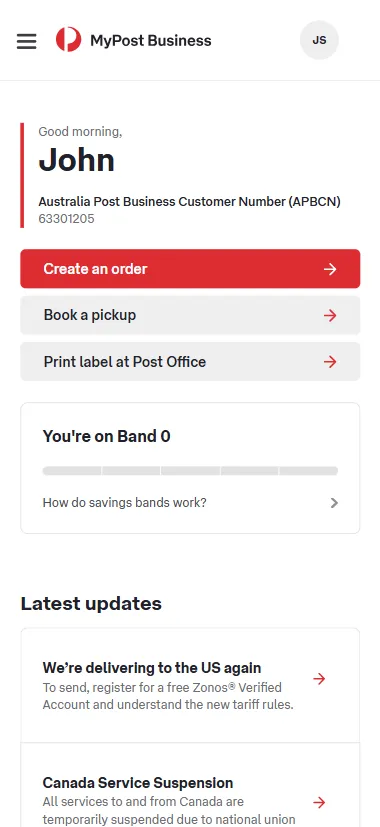
U.S. Customs and Border Protection (CBP) extended the compliance date 90 days from October 22, 2026 to January 20, 2027. CBP confirms there are no changes to international mail entry procedures before then. Read the update.
Keep shipping to the U.S. with Australia Post + Zonos
As of August 29, 2025, a U.S. executive order requires duties to be paid on all shipments before clearing into the U.S. If you’re shipping parcels valued at $2,500 USD or less from Australia to the United States using Australia Post, you must prepay duties before your parcel crosses the border. Australia Post has partnered with Zonos to offer Zonos Verified Accounts to Australian businesses as a way to pay U.S. duties on postal shipments—so you can continue shipping postal to the U.S.
Some Australia Post shipments will need additional product data to enter the U.S. Your Verified Account now helps you find and store it, alongside the duty payments it already handles. See what to do.
Start today